Not all products or features are available in all markets.

  • Change country/language

    Looks like you’re in {} — you’re on the {} site.

    Cancel

    Country and language selected

    You are being redirected to the {} site. Products and services availability vary by country. Do you wish to continue?

    Continue
    Cancel

Adequacy of Anesthesia solution

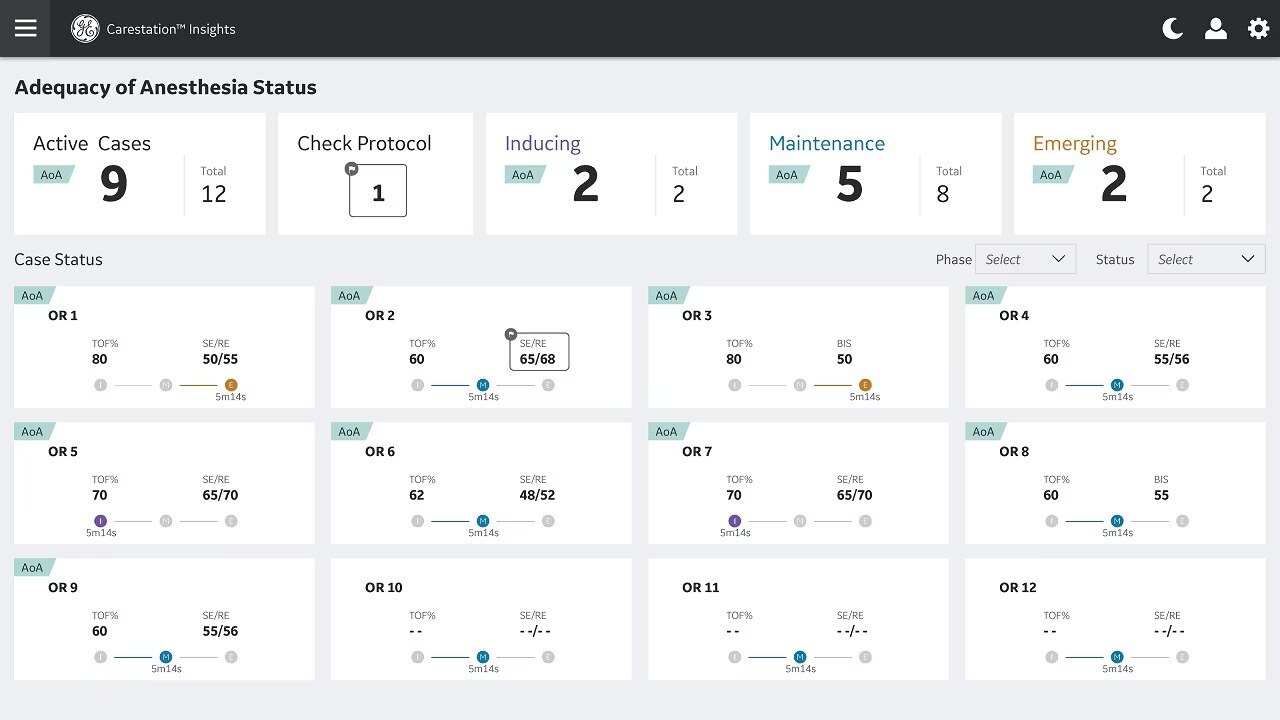
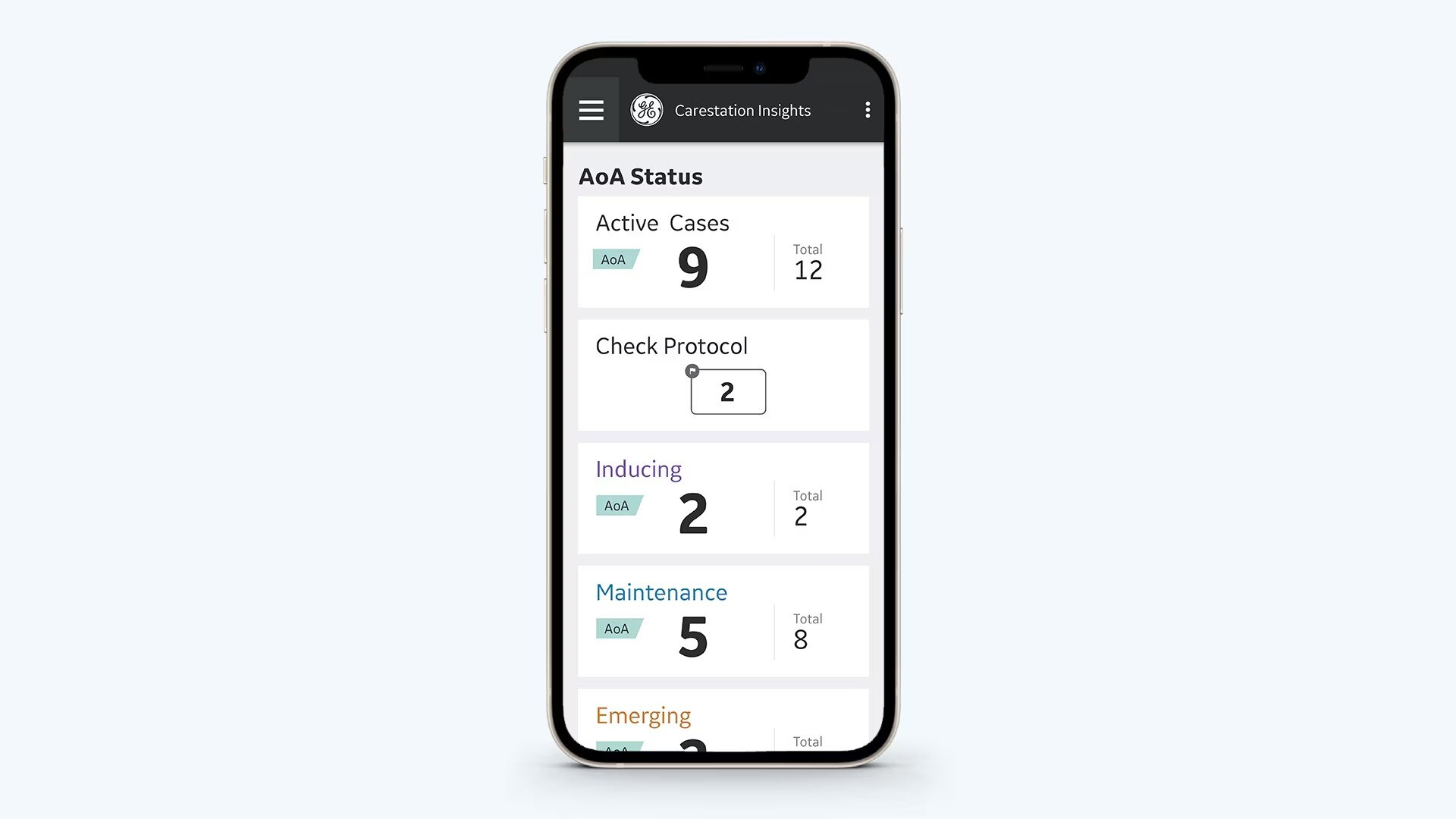
Our Adequacy of Anesthesia (AoA) solution consists of powerful parameters, devices, consumables and a digital analytics application that may help you in your goals to improve outcomes, save costs and improve workflow efficiency.

adequacy-of-anesthesia-hero-hc-en

At a glance

Clinical excellence

Unique clinical measurements support tailored anesthesia delivery

Decision support

Integrated tools to help optimize workflow

Optimize performance

Analytics to help support clinical, cost and sustainability goals

Video Thumbnail
3 mins

The Power of the Adequacy of Anesthesia Solution

Video Thumbnail
2 mins

Adequacy of Anesthesia Concept

Video Thumbnail
2 mins

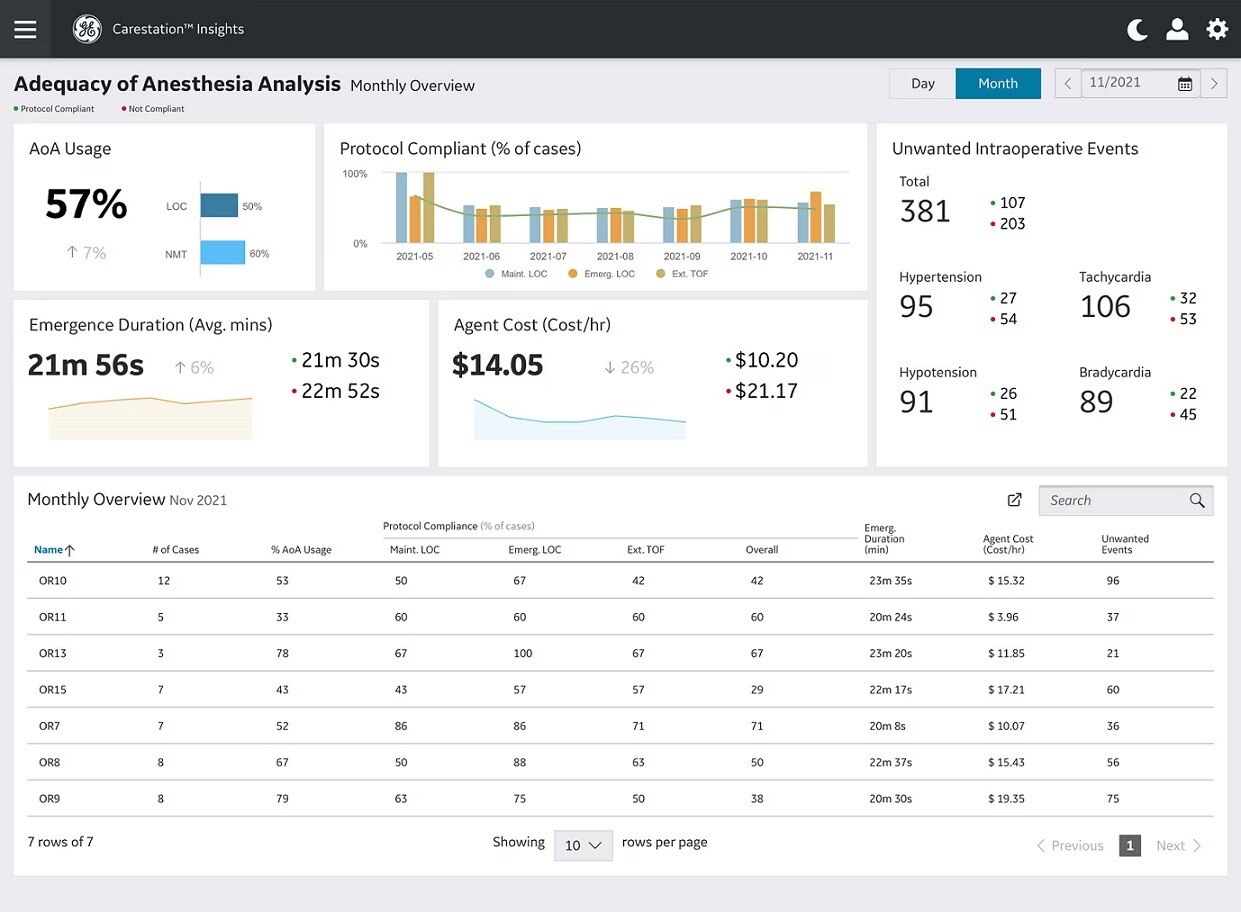
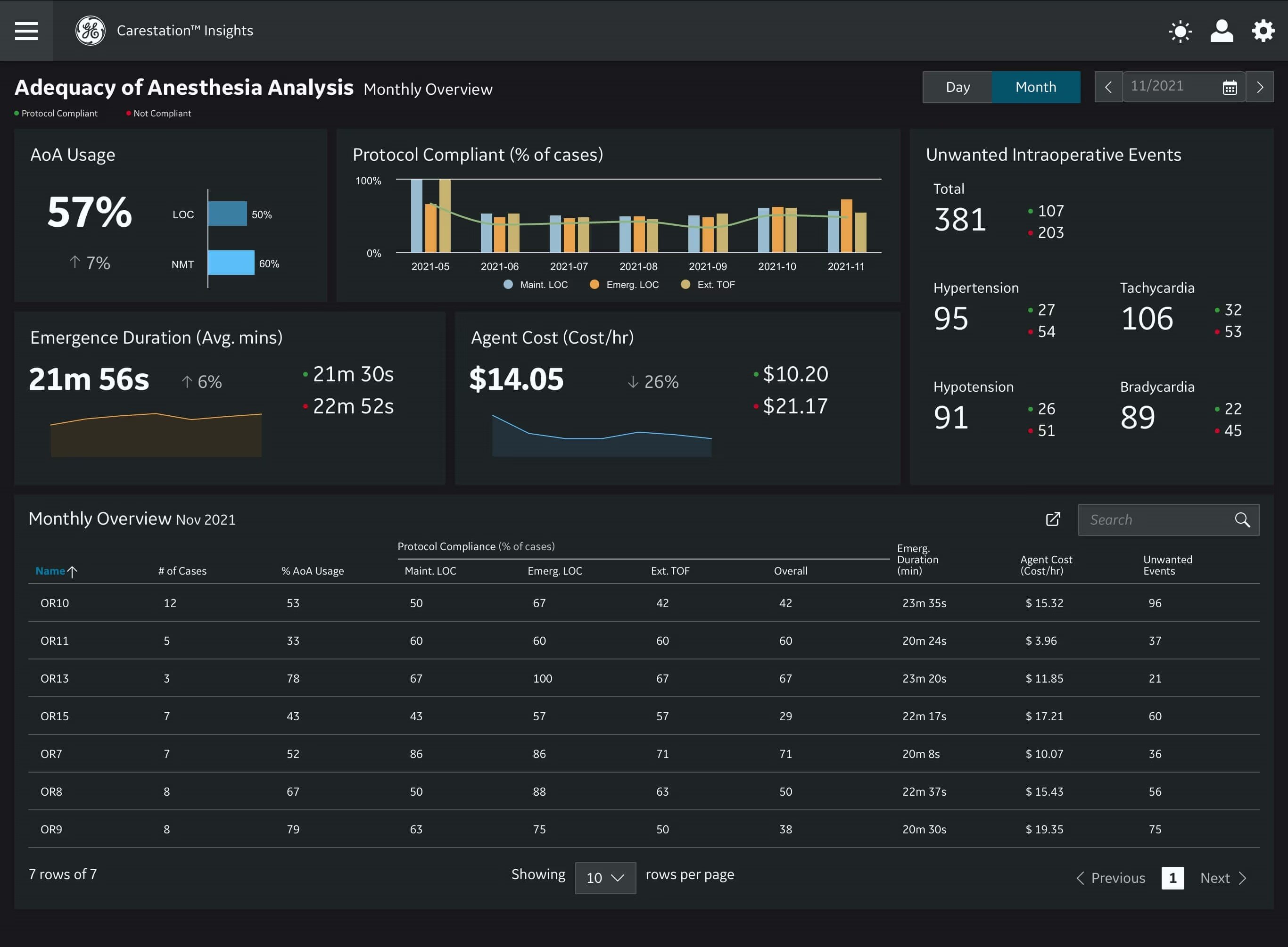
Carestation Insights AoA application

Show More
THE GE HealthCare DIFFERENCE
Anesthesia delivery is a critical part of healthcare delivery
AoA consists of various unique parameters that provide continuous measurements to help you assess a patient’s response to inhaled and intravenous hypnotics as well as NMBAs during general anesthesia.
Level of consciousness
Entropy monitoring

Entropy™ measures the state of the brain and has been shown to reflect the different phases of anesthesia. The use of Entropy in adults has been found to reduce the use of certain hypnotic drugs, therefore, helping anesthesiologists to tailor anesthetic drugs for each patient, helping avoid unnecessarily deep states of hypnosis, including burst suppression that has been associated with increased risk of delirium.1

With Entropy monitoring, it is possible to help ensure faster emergence and recovery in the operating room. It is a tool for optimising the perioperative process and ensuring efficient patient flow.

adequacy-of-anesthesia-entropy-sticky-ci-en
Relaxation and immobility
Neuromuscular Transmission (NMT) monitoring

NMT is the transfer of an impulse between a nerve and a muscle in the neuromuscular junction. NMT can be blocked by neuromuscular blocking agents—drugs which cause transient muscle relaxation and prevent the patient from moving and breathing spontaneously.

Post-operative residual curarization (PORC) incidence in PACU is estimated to be up to 45% after a single shot muscle relaxation.2 Considering that about 230 million patients undergo a major surgery each year, about 100 patients per minute would suffer from discomfort, reduced ventilation capacity, double vision and a 4- to 5-times increased aspiration risk. Such residual effects have clinical consequences that can prolong hospitalization, particularly in vulnerable populations such as obese patients.

adequacy-of-anesthesia-relaxation-sticky-ci-en

Decision support tools to help optimize workflow and patient care

GE HealthCare’s CARESCAPE™ patient monitors provide the functionalities you need to help you seamlessly and easily deliver optimal anesthesia and patient care.

Holistic view

GE HealthCare offers an integrated, holistic view of the patient's response to anesthesia. The CARESCAPE™ monitor displays values and trends obtained from parameter modules for Entropy (State Entropy SE, Response Entropy RE and burst suppression ratio), and NMT.

adequacy-of-anesthesia-holistic-view-scurve-ci-en

NMT Hookup Advisor™

Integrated into the CARESCAPE monitor, the NMT Hookup Advisor shows correct NMT sensor placement and impedance check of electrodes.

adequacy-of-anesthesia-nmt-hookup-scurve-ci-en

AoA measurements related content

innovations-article-perioperative-hypotension
innovations-article-sweet-spot
AoA-cortical-subcortical-graphics-1356-710
content card image
innovations-article-safe-efficient
innovations-article-mythssurrounding

Resource to help drive clinical excellence

ClinicalView_Teams_Background_Image

Footnotes
  1. Daiello LA, et al., Postoperative Delirium and Postoperative Cognitive Dysfunction: Overlap and Divergence. Anesthesiology 131(3), 477-491 (Sep 2019).
  2. Actual time may vary slightly due to hospital network and processing times.

Get in touch

Have a question? We'd love to hear from you.

Contact us

We're ready to support you in your moments that matter.

We’re sorry, a problem occurred with the form. Please try again.
Thank you for your inquiry.

We will be in touch soon.

Something went wrong

We will check and get back.